
Autodemia: research automation built on trusted AI computing
As AI agents enter research, efficiency is only the first question. Real research execution also needs a computing space that is secure, controllable, traceable, and reproducible.
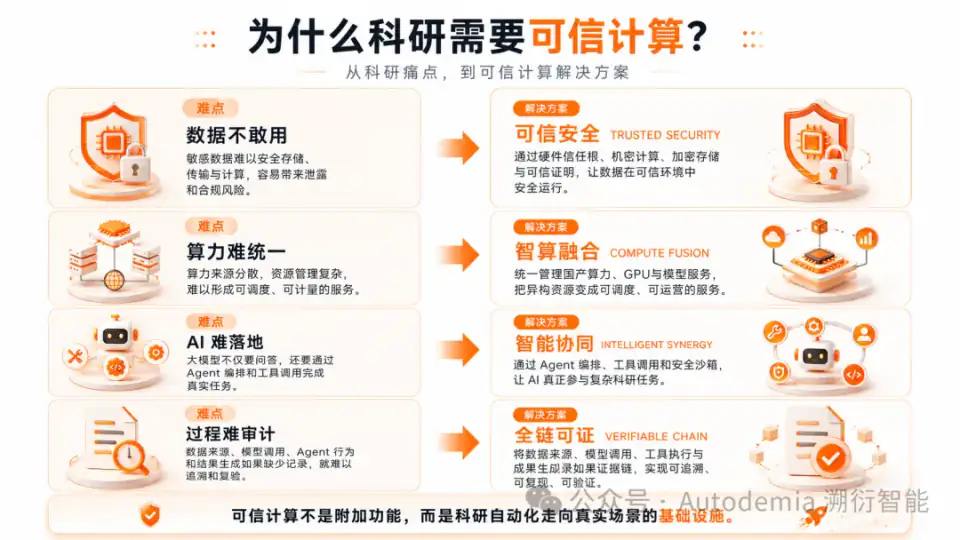
As foundation models move into high-value data settings across healthcare, research, government, and enterprise R&D, data security and trusted computing become prerequisites for meaningful AI deployment. Autodemia connects the full research-automation lifecycle with callable GPU resources and a trusted computing space.
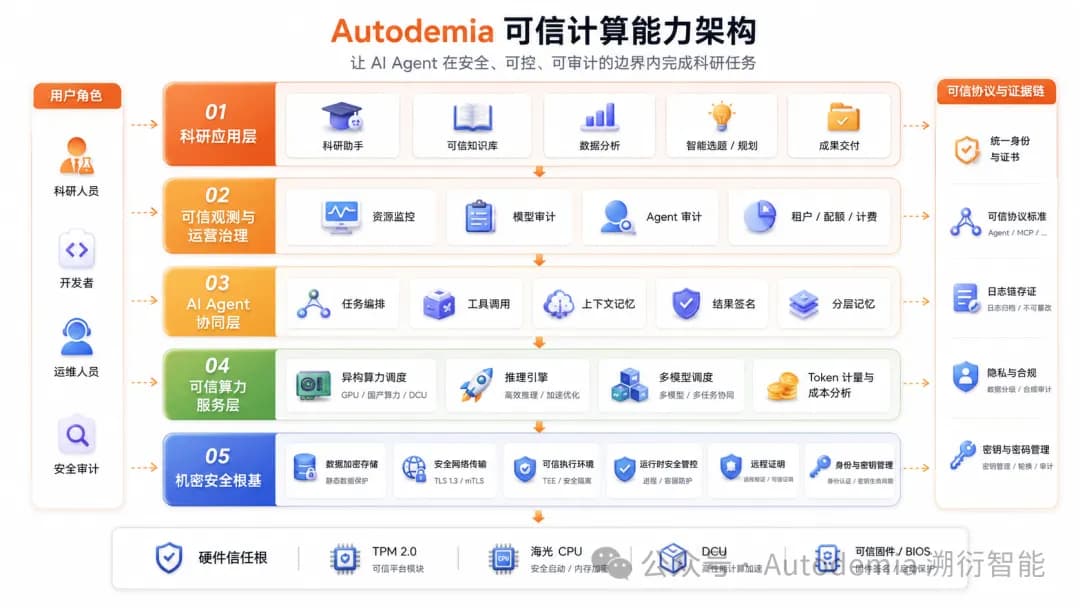
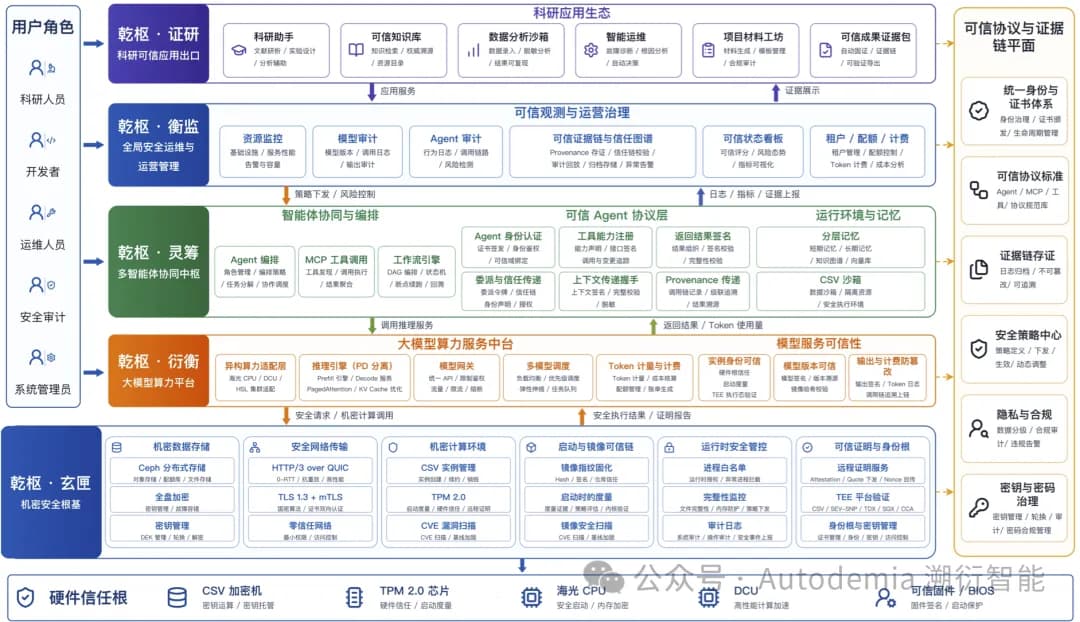
Qianshu draws on Hygon confidential-computing technology, Sugon AI servers, and the domestic compute ecosystem to span the hardware root of trust, trusted compute, intelligent collaboration, security governance, and application delivery. Data moves inside a trusted environment, models serve under verifiable conditions, and agents execute within auditable boundaries.
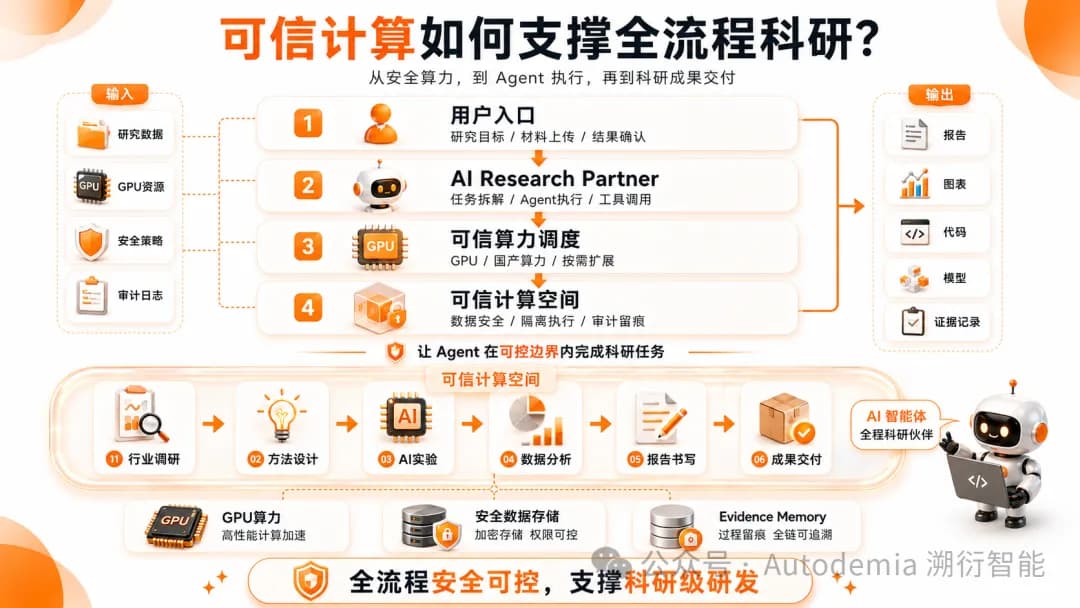
Autodemia organizes trusted computing into four layers: a trusted data space for project assets; compute orchestration across GPUs and domestic hardware; agent execution for research skills, code, and analysis tools; and an evidence layer that records inputs, calls, parameters, logs, and human approvals.
This moves research automation beyond content generation. Investigation, method design, AI experiments, data analysis, and delivery can progress in one trusted space. Individual researchers gain easier access to compute; universities and labs retain process assets; hospitals and enterprises can use sensitive data under tighter controls.
Why this matters
Autonomous AI research cannot depend on model capability alone. Research agents can enter real hospital, university, and enterprise environments only when data is usable, compute is orchestrated, and every process is auditable. Qianshu brings those conditions into one shared foundation.